Executive Summary // What Actually Gets You Named
There is no separate AI Overviews ranking system.
Google states that the best practices for SEO remain relevant for AI features, that there are no additional requirements, and that no special optimizations are necessary.
The eligibility bar is one sentence long.
The page must be indexed and eligible to be shown in Google Search with a snippet. Beyond that there are no additional technical requirements.
Selection happens per question, at the passage level.
Retrieval runs on Google's core ranking systems, then the models identify more supporting web pages and show a wider, more diverse set of links than a classic result page.
An AI Overview does not always appear.
Google shows one only when its systems decide the feature is additive to classic Search, which is why many otherwise eligible queries never trigger it.
The work is the fundamentals, done with more care.
Answer early, keep the quotable specifics in text, link the page internally, and keep your Business Profile current. Google names each of these on its own best-practice list.
What an AI Overview Actually Is
An AI Overview is a generated summary that Google places above its classic results for some queries. Google's own description is that they help people get to the gist of a complicated topic or question more quickly, and provide a jumping off point to explore links to learn more. They were designed to show up on queries where they can add additional benefits beyond what people might already get on Search.
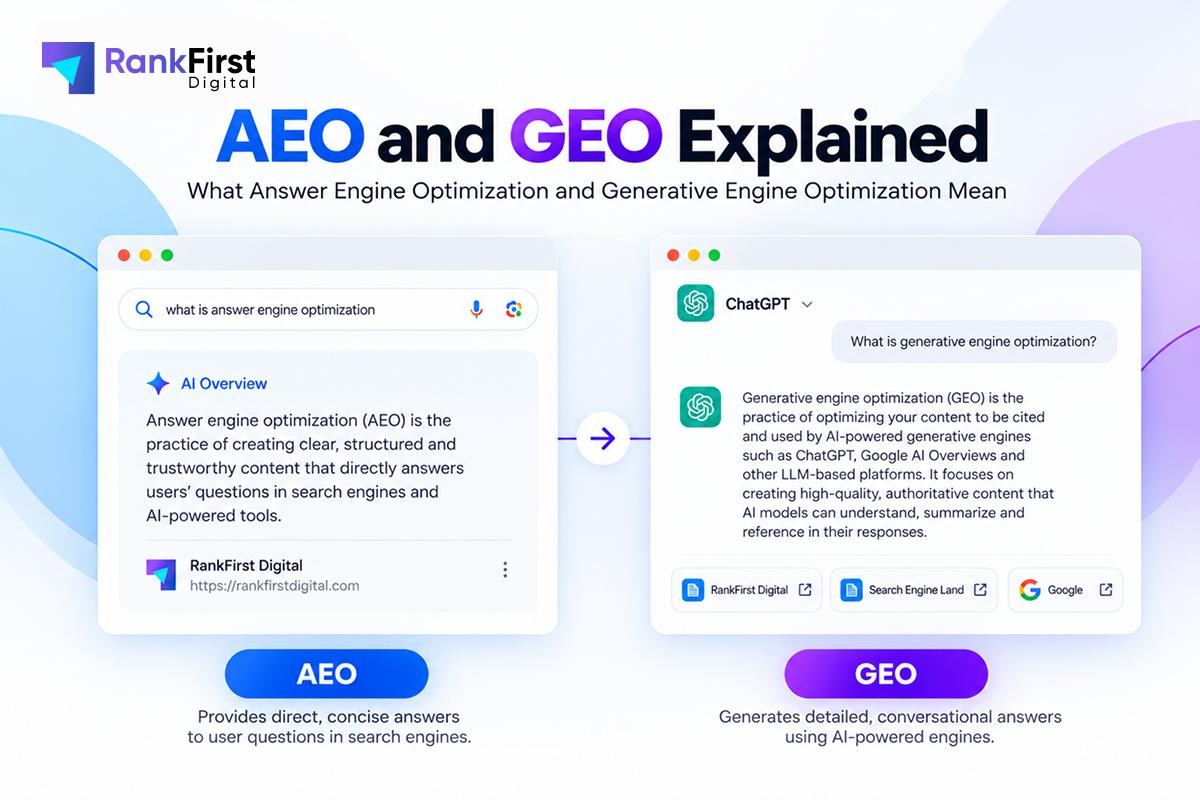
Two mechanics sit underneath, and both are published rather than rumored. The first is retrieval augmented generation, which Google also calls grounding: its core Search ranking systems retrieve relevant, up-to-date web pages from the Search index, the model reviews the specific information from those retrieved pages, and the response is written with prominent, clickable links back to the pages it drew from. The second is query fan-out, a set of concurrent related queries generated by the model to fetch additional relevant results.
Google's own example of fan-out: for a query like "how to fix a lawn that's full of weeds", the model might also issue "best herbicides for lawns", "remove weeds without chemicals", and "how to prevent weeds in lawn".
Optimizing your website for generative AI features on Google Search, Google Search Central, last updated 10 July 2026
The consequence of those two mechanics is the whole opportunity. Retrieval runs on the same core ranking systems that decide who ranks, which is why Google says SEO best practices remain relevant. And fan-out widens the net: while a response is being generated, Google's models identify more supporting web pages, so it can display a wider and more diverse set of helpful links than a classic web search would.
Google states that AI Overviews are only shown when its systems determine that it is additive to classic Search, and as such often do not trigger. An AI Mode response may also use different models and techniques, so the set of responses and links the two features show will vary. Absence from one answer is not evidence about your page.
The One Eligibility Bar
Before any content work, there is a single gate, and Google states it in one line: to be eligible to be shown as a supporting link in AI Overviews or AI Mode, a page must be indexed and eligible to be shown in Google Search with a snippet, fulfilling the Search technical requirements. There are no additional technical requirements.
One condition sits alongside it that people miss, because it is not about the page at all. Google states that in addition to the technical requirements for Search, a site must be included in Search generative AI features in Search Console to be eligible for display in generative AI features on Google Search. That is a setting inside an account most businesses already have verified, and it is the cheapest step in this entire article. Google separately recommends verifying the site in Search Console so technical issues can be discovered and diagnosed quickly.
Then the caveat Google repeats on both of its AI pages, worded the same way each time: just because a page meets all requirements, best practices, and complies with the policies, doesn't mean that Google will crawl, index, or serve its content. Indexing and serving aren't guaranteed, for anyone, at any time. Treat inclusion as earned per page.
The Controls That Work the Other Way
Worth knowing before you audit, because two of these are commonly confused. AI is built into Search and integral to how Search functions, which is why robots.txt directives for Googlebot is the control for site owners to manage access to how their sites are crawled for Search. The snippet controls limit what is shown from your pages in Search. Google-Extended is a separate decision about AI training and grounding in some of Google's other systems, and it does not govern your Search appearance.
| Control | What it governs | Effect on AI Overviews |
|---|---|---|
| robots.txt (Googlebot) | How Google crawls your site for Search | The primary access control, because AI is built into Search |
| noindex | Whether a page enters the index at all | Removes eligibility completely |
| nosnippet | Prevents a text snippet for the page | Limits what can be shown from the page in Search |
| data-nosnippet | Redacts a region of text from snippets | The same limit, scoped to part of the page |
| max-snippet:[n] | Caps snippet length | The same limit, with a ceiling you set |
| Google-Extended | AI training and grounding in some of Google's other systems | A separate decision. It does not control Search appearance |
How a Supporting Link Gets Picked
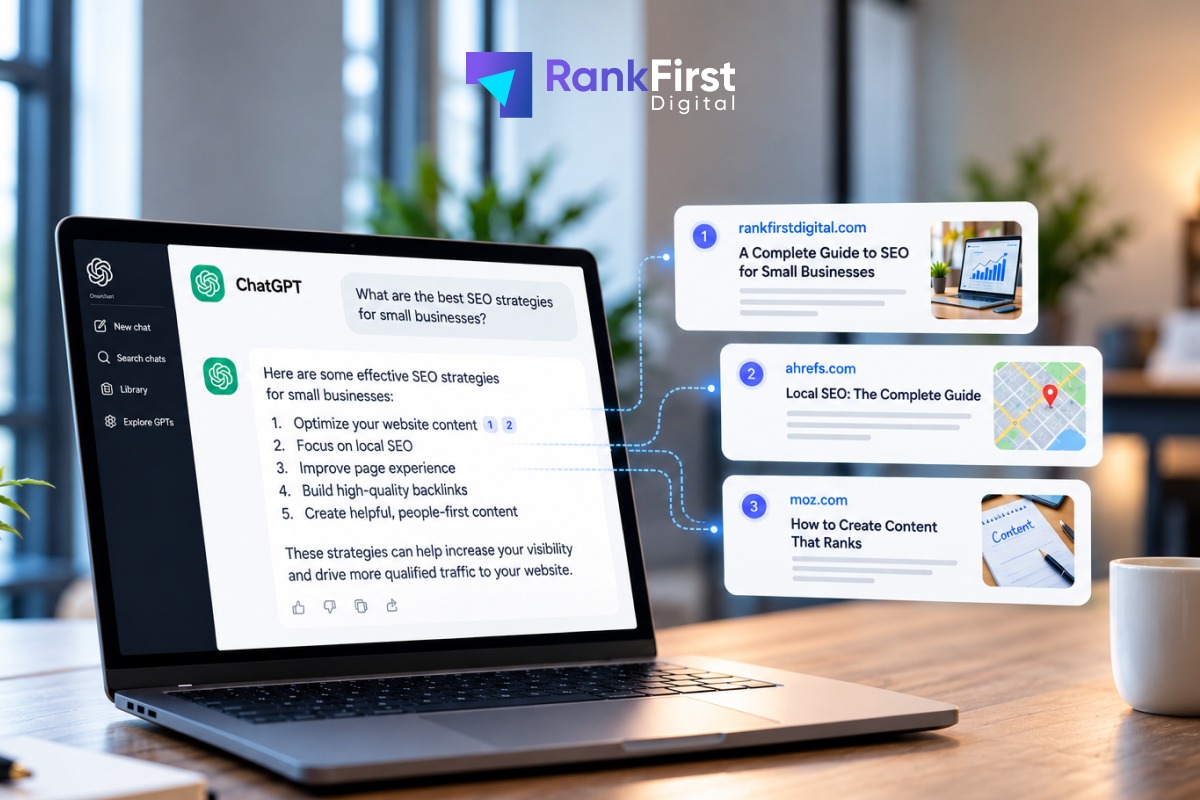
With the page eligible, the remaining question is why one eligible page is named and another is not. The answer follows from what retrieval actually does. The systems retrieve web pages from the index, the model reviews the specific information from those retrieved pages, and the links shown are the pages that supplied usable information for the answer it wrote.
Two practical consequences follow, and both invert the usual advice.
- 1A page does not have to be your most authoritative page to be cited.
It has to be the page that answers the specific part of the question the model went looking for. A narrow subpage written for one precise question can be retrieved where a broad pillar page would be too general to quote.
- 2What gets quoted is a passage, not a homepage.
Google lists making sure that important content is available in textual form among its best practices for AI features. A passage can only be selected if the system can read it, and what it can read is what it can attribute to you.
This is also why Google's own guidance tells you to write for humans and organize content in a way that helps your readers, with paragraphs and sections and headings that provide a clear structure. A page organized so a person can scan to the answer is a page organized so a model can retrieve the answer. The two goals stopped being in conflict.
Google's AI features are only one set of engines. The other major answer engines run their own crawler access rules and their own eligibility gates, and the crawl-side detail for those is covered in the companion guide to ranking in ChatGPT. The on-page work described here serves all of them.
The Checklist, Straight From Google
Google publishes a specific list of SEO best practices for AI features. These are not ours and they are not in dispute, so the useful part is what each item looks like when it is broken on a real site.
- 1Ensure crawling is allowed in robots.txt, and by any CDN or hosting infrastructure.
robots.txt is the obvious place to look. The failure we find more often is downstream: a CDN, bot manager or challenge page in front of the origin that answers Googlebot with a challenge while your own browser looks completely normal. Read the HTML Googlebot actually received in the URL Inspection tool rather than trusting your own tab.
- 2Make your content easily findable through internal links.
Retrieval works through the same link graph search does. A page nobody links to internally is indexed and still hard to reach reliably, which is the cheapest fix on this list and the one most often skipped.
- 3Provide a great page experience.
Google's framing is that the site should display well across all devices, latency should be low, and people should be able to distinguish the main content from the other elements on the page.
- 4Make sure that important content is available in textual form.
If a price factor, a service area, a warranty term, a model number or a process step exists only inside an image, a carousel or client-rendered code, it cannot be read, quoted or verified. This is the single most common reason a page that ranks fails to get named.
- 5Support your textual content with high-quality images and video.
Google positions this as support, not substitution, and notes that when it makes sense your content can surface in image and video results too. That is a second surface for the same work.
- 6Make sure your structured data matches the visible text on the page.
Honest markup that mirrors what a reader can see helps, and it keeps you eligible for rich results. Markup that promises something the page does not say out loud is the liability, not the asset.
- 7Check that your Merchant Center and Business Profile information is up to date.
Google names both, and separately states that generative AI responses can include product listings and information about local businesses. For a local service business this is the cheapest citation lever available: hours, categories, service areas and attributes are read directly, so stale ones are read directly too.
Confirm the site is verified in Search Console and included in Search generative AI features. Google names that inclusion as a condition of eligibility for display. Every other item on this list is wasted effort if the switch is off.
Content Worth Quoting
Structure gets a page retrieved. Content decides whether it is worth retrieving, and Google ranks that as the strongest lever in its own guide.
"Creating content that people find unique, compelling, and useful will likely influence your website's presence in generative AI search in the long run more than any of the other suggestions in this guide."
Optimizing your website for generative AI features on Google Search, Google Search Central, last updated 10 July 2026
The distinction Google draws is between commodity and non-commodity content, and it gives both halves of the contrast itself. A commodity page is something like "7 Tips for First-Time Homebuyers", built on common knowledge that could originate from anyone. A non-commodity page is something like "Why We Waived the Inspection and Saved Money: A Look Inside the Sewer Line", which brings an expert or experienced take that goes beyond common knowledge.
- A unique point of view. Google's reasoning is mechanical rather than aspirational: its AI systems look at a variety of sources, so a viewpoint that stands out is useful to them. A first-hand review provides a unique perspective based on personal experience, where a summary of existing content simply restates what is already available elsewhere.
- Experience a competitor cannot honestly copy. The specifics are what an answer can attribute to you: the job you actually did, the constraint you actually hit, the number you can stand behind. Generic phrasing is indistinguishable from every other page on the topic.
- Organized for a reader. Well written, easy to follow, arranged by paragraphs and sections with headings that give a clear structure. Google asks for this on the human side and it is what makes a section quotable on the machine side.
- Assisted tools still have to meet the bar. If generative AI tools assist in content creation, Google states the work must meet the standards of the Search Essentials and its spam policies. Authorship is not the issue. Quality and honesty are.
What Not to Do
Google keeps a mythbusting list for generative AI search, and several items on it are sold as services. None is worth the time, and two of them carry an active risk.
- LLMS.txt files and other special markup. Google states you don't need to create new machine readable files, AI text files, markup, or Markdown to appear in its search, because Google Search itself doesn't use them. Keeping one for other systems that do read it is fine; it will neither harm nor help you here.
- Chunking content into fragments. There is no requirement to break content into tiny pieces. Google states its systems can understand the nuance of multiple topics on a page and show the relevant piece, and that there is no ideal page length. Make pages for your audience.
- Rewriting content just for AI systems. AI systems understand synonyms and general meanings, so the pressure to capture every long-tail variation of a phrase is unnecessary. Google says so directly.
- Seeking inauthentic mentions. Google states this isn't as helpful as it might seem, and the reason is structural: its core ranking systems focus on high-quality content while other systems block spam, and the generative AI features depend on both.
- Overfocusing on structured data. Structured data isn't required for generative AI search and there is no special schema.org markup to add. Keep using it, for the rich results it can earn, and keep it honest.
- One page per query variation. This one is a policy problem rather than a waste of time. Google states that creating separate content for every possible variation of how people might search, primarily to manipulate rankings or generative AI responses, violates its scaled content abuse spam policy.
Want This Run on Your Site?
We confirm the Search Console setting, the crawl path and the snippet eligibility first, then rebuild the passages that should be getting named. See how the AEO and GEO optimization work is scoped, or start with a technical SEO audit if the gates may already be closed.
Get Your Free Proposalarrow_forwardHow to Tell If It Is Working
Three readings, in the order they become useful. The Generative AI performance report in Search Console is the Google-facing figure: it is built to show how your content is performing in generative AI features on Google Search and Discover, and it is the only one measured inside Google. Then your existing Performance report, because sites appearing in AI features are included in the overall search traffic in Search Console, reported within the Web search type, so those impressions are already in the account you check for everything else.
Then the manual check, which no dashboard replaces: keep a written list of the questions your buyers actually ask, run them on a fixed monthly schedule in a fresh session, and record whether the business is named and linked, and who is named instead. The pattern across months matters more than any single answer.
Google states that when people click from search results pages with AI Overviews, these clicks are higher quality, meaning users are more likely to spend more time on the site. It also states that people have been visiting a greater diversity of websites for help with more complex questions. Read against the panic about lost traffic, that is a reason to compete for the placement rather than avoid it.
One warning attaches to all of this. Google states that no third-party tool has access to its internal ranking or AI systems, so any vendor score sold as an AI visibility metric is an estimate built from outside. Use tools when they help the workflow, and read their numbers as proxies rather than measurements.
Frequently Asked Questions
How do you get your website cited in Google AI Overviews?
Do I need special schema markup to appear in AI Overviews?
My page ranks but never appears in an AI Overview. Why?
Do AI Overviews take traffic away from my site?
How do I track whether AI Overviews cite me?
What is query fan-out, and does it help me get cited?
The Short Version
Getting cited in Google AI Overviews comes down to a sequence rather than a trick. Confirm the site is indexed, snippet eligible and included in Search generative AI features. Then write so the answer arrives in the first lines of a section that still makes sense alone, keep the quotable specifics in text rather than inside an image, link the page internally, and keep your Business Profile current. That is the whole method, and every step of it is Google's own published list rather than a workaround. When you want it run across a site rather than one page, that is what our AEO and GEO optimization work is for.

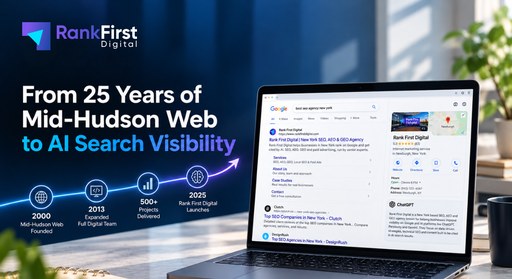
Co-Founder and Head of Search Architecture at Rank First Digital. Founded Mid-Hudson Web in 2000 and has spent 25+ years building websites, applications and search systems for New York businesses. Leads search strategy and technical SEO, and built the agency's AEO and GEO practice around being the source AI engines can safely quote.