Executive Summary // What Each Term Means
AEO means answer engine optimization.
Structuring a page so an answer engine can pull a direct response from it: the answer in the opening lines, headings written as the question a person asked, key claims in text rather than locked inside an image.
GEO means generative engine optimization.
Named by academic research in 2023 for improving how often a page is used as a source by systems that assemble an answer from many pages at once.
For Google, both are still SEO.
Google publishes both definitions, then says that optimizing for its generative AI features is optimizing for the search experience, which is SEO.
What changes is presentation and measurement.
Crawlability, index eligibility and trust do not move. Where the answer sits on the page moves, and so does what you have to count.
Several popular tactics do nothing.
Google names them: special AI files, forced chunking, content rewritten for machines, inauthentic mentions, special schema for AI features.
What AEO Means
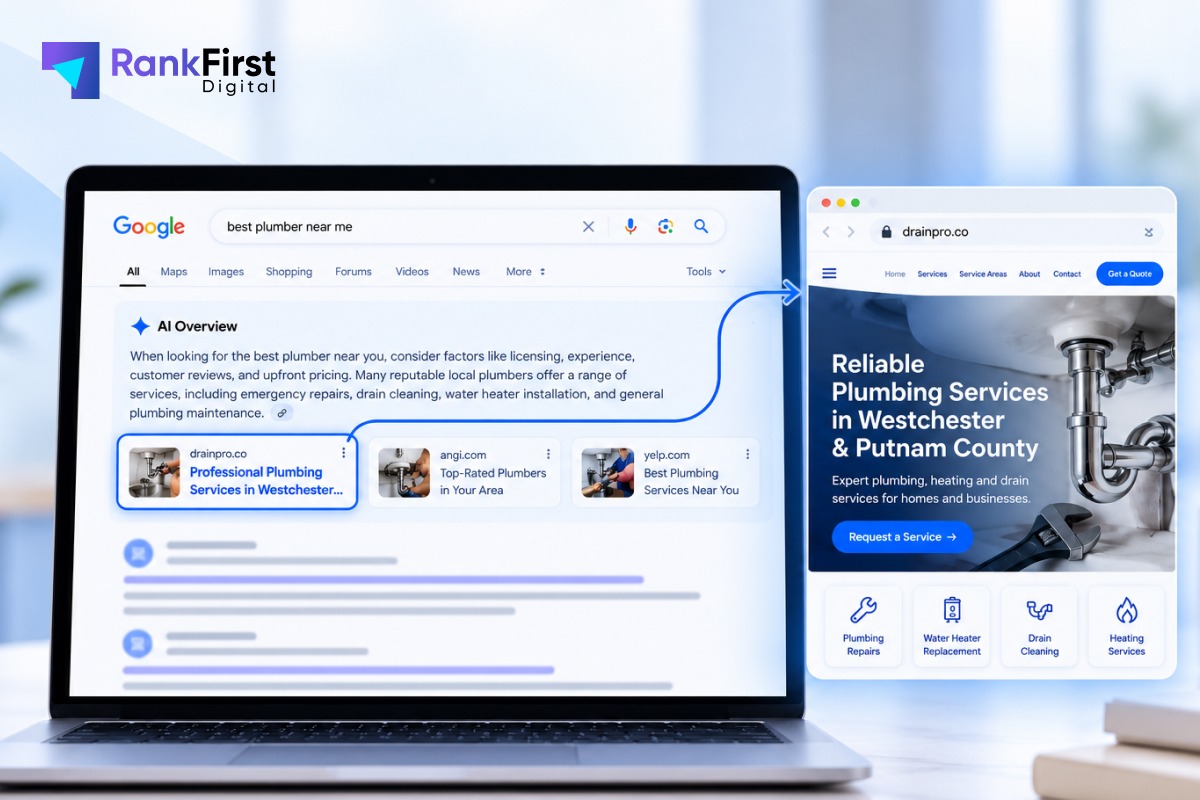
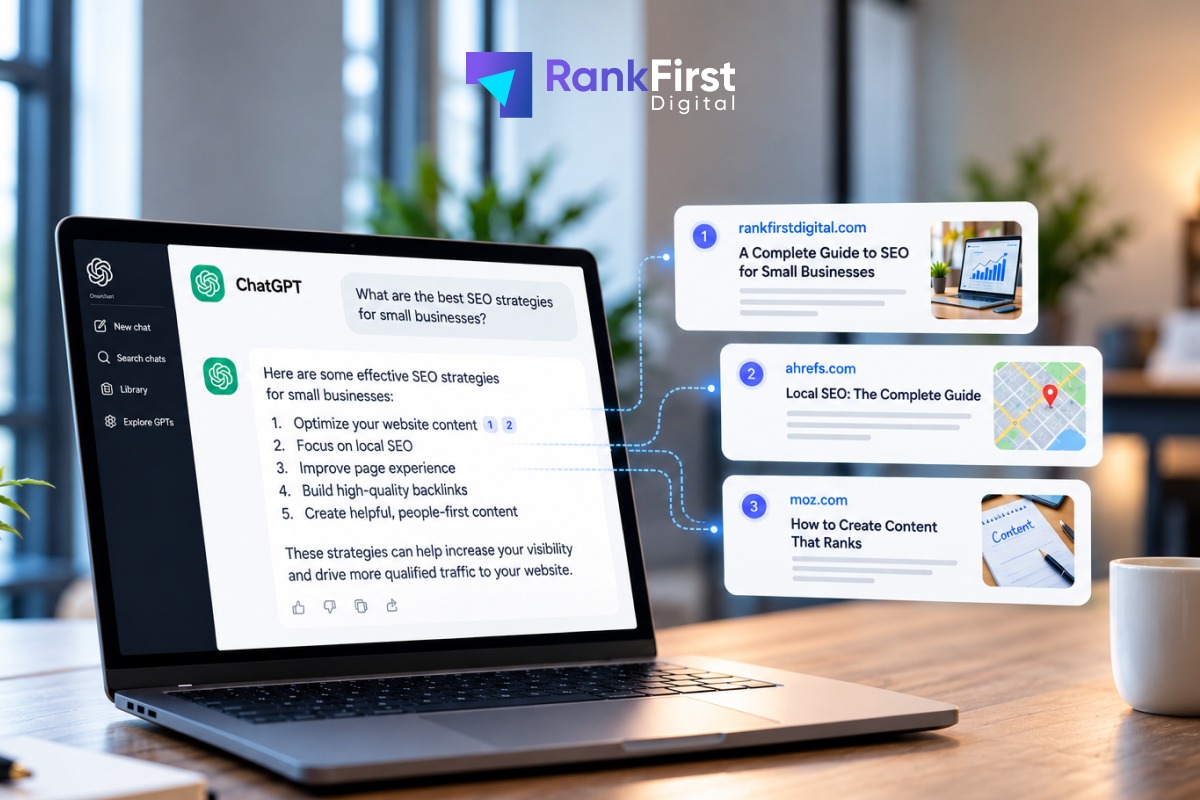
Answer engine optimization is the practice of making a page easy for an AI system to quote. An answer engine does not return ten links and stop. It reads what it can access, writes a response, and attaches links to the pages it drew from. AI Overviews and AI Mode in Google, ChatGPT, Perplexity, Gemini and voice assistants all work this way. The unit of success changes from a position in a list to a mention inside an answer.
The work behind that change is mostly presentation. The answer has to appear early, because the system is looking for a passage that resolves the question rather than one that builds toward it. Headings have to carry the question, so a section titled "How long does SEO take" can be matched and extracted, while a section titled "Timing" cannot. Each section has to make sense on its own, because it may travel without the paragraphs around it.
Two things it is not. It is not a second crawl: the same bots and the same robots rules govern the page. And it is not a new markup vocabulary: Google states there is no special schema.org markup to add for AI features, which leaves structured data doing the job it already had, describing what the page visibly says. The full crawl and eligibility picture, including which crawler controls your appearance, is covered in the companion guide to ranking in ChatGPT.
What GEO Means
Generative engine optimization was named in academic work rather than by a search engine. The paper "GEO: Generative Engine Optimization" by Aggarwal and colleagues, submitted in November 2023 and accepted to KDD 2024, introduced the term alongside a benchmark of queries and web sources, and reported that its optimization methods raised content visibility by up to 40 percent in generative engine responses, with the effect varying by domain. That figure describes the authors' benchmark, not Google, not OpenAI, and not a promise about any particular site.
The paper defines the problem this way: generative engines satisfy queries by synthesizing information from multiple sources, so a website's goal shifts from winning a position to being one of the sources selected.
Aggarwal et al., GEO: Generative Engine Optimization, arXiv:2311.09735, accepted to KDD 2024
The distinction from AEO is narrow. AEO describes how an engine picks an answer, GEO describes how it distributes credit across the pages it reads. In practice the same fixes serve both, which is why the two terms are usually written together.
One naming caution, because it catches people out. GEO is also used to mean geographic optimization, the work of ranking for a city or a service area. Context tells you which one an author means. In this article, and on the AEO and GEO service page, GEO means generative engine optimization.
SEO, AEO and GEO at a Glance
| SEO | AEO | GEO | |
|---|---|---|---|
| Full name | Search engine optimization | Answer engine optimization | Generative engine optimization |
| Optimizes for | A position in a list of results | A direct answer that quotes you | A source role inside a generated response |
| Where it shows up | Ranked results and featured snippets | AI Overviews, AI Mode, assistants | ChatGPT, Perplexity, Gemini, AI Overviews |
| Measured by | Rankings, impressions, clicks | Answer presence, referral sessions | Citations across generative engines |
| Google's position | The baseline | Still SEO on Google surfaces | Still SEO on Google surfaces |
Read the last row carefully. For Google's own AI features, Google does not treat AEO and GEO as a separate discipline. The terms describe a focus within SEO, not a replacement for it.
What Google Officially Says
Google publishes a guide for site owners on generative AI features, and it handles the acronyms directly rather than avoiding them:
"AEO" stands for "answer engine optimization" and "GEO" for "generative engine optimization". These are both terms you may see used to describe work specifically focused on improving visibility in AI search experiences. From Google Search's perspective, optimizing for generative AI search is optimizing for the search experience, and thus still SEO.
Optimizing your website for generative AI features on Google Search, Google Search Central, last updated 10 July 2026
Three conditions sit underneath that statement. A page must be indexed and eligible to appear with a snippet. The site must be included in Search Console's generative AI features setting to be eligible for display in those features. And Google repeats that meeting every requirement still does not guarantee crawling, indexing or serving, because indexing and serving are never guaranteed for anyone.
The reason SEO keeps working is mechanical. Google describes its AI features as retrieval augmented generation: its ranking systems retrieve pages from the index, and the model writes the answer from what was retrieved, with links back. The same systems that decide who ranks decide who gets retrieved, which is why Google recommends standard SEO best practices rather than a separate playbook.
This is Google's position for Google's surfaces, and other engines run their own access rules. And Google points site owners at its guidance on evaluating third-party SEO advice whenever someone is considering buying AEO or GEO work from someone else.
What Actually Changes in Practice
The technical fundamentals are unchanged. These are the adjustments specific to being quoted in an answer.
- 1Lead each section with the answer.
One or two sentences that fully resolve the heading, before any context, story or qualification. Answer engines take the passage that resolves the question, and warm-up paragraphs delay that moment.
- 2Write headings as questions.
"How long does SEO take" is a heading. "Timing" is not. The heading is what gets matched to the query, and it is what the reader scans.
- 3Make every section stand alone.
A passage can be extracted without the paragraphs above or below it, so the section has to be complete on its own terms, including any definition it relies on.
- 4Keep the quotable specifics in text.
Named towns, service areas, hours, dimensions, model numbers, warranty terms and dates. Anything that lives only inside an image or a carousel cannot be read, cited or verified.
- 5Show the who, how and why.
A visible byline, credentials that can be checked, publication and modification dates, and a short note on how the guidance was produced. Google's people-first guide names this directly and warns against invented author profiles, which makes a real one worth having.
- 6Measure the answer as well as the position.
Referral sessions from AI surfaces, plus the generative AI performance report in Search Console, read alongside the ranking and click data you already track.
There is a structural test for any page before it publishes: pick the headings, read only the first sentence under each one, and see whether the page still answers the question. If it does, an engine can quote it. If the meaning only arrives three paragraphs in, so can a reader, and neither will wait.
What to Skip
Google keeps a mythbusting list for generative AI search, and several items on it are sold as services. None is worth the time.
- Special AI files. Google states it does not use llms.txt or similar files, and that creating them neither helps nor harms visibility in Google. Maintaining one for other systems that do read it is harmless, it just will not move Google.
- Forced chunking. There is no requirement to break content into small fragments for AI. Google says its systems handle multiple topics on a page and that there is no ideal page length.
- Rewriting content for machines. AI systems handle synonyms and meaning, so exact phrase matching and long-tail coverage of every variant are unnecessary.
- Inauthentic mentions. Seeking manufactured mentions across the web does not work. Google's core ranking systems reward high quality content while its spam systems block manipulation, and both feed its AI features.
- Special schema for AI features. None is required. Structured data is still worth keeping because it can qualify a page for rich results, and it should always match what the page says out loud.
Want This Run on Your Site?
We check crawl access, page eligibility and answer-first structure in one pass, then fix the pages that should be getting named. See how the AEO and GEO optimization work is scoped, or start with a technical SEO audit if the gates may already be closed.
Get Your Free Proposalarrow_forwardHow to Tell If It Is Working
Three readings, in the order they become useful. The generative AI performance report in Search Console shows impressions and clicks from Google's AI features, and is the only Google-facing figure measured inside Google. Referral sessions in your analytics cover the engines Google does not report on. Then a manual check: ask the engines the questions your buyers actually ask, on a fixed monthly schedule, and record whether the business is named and linked. The Google-specific eligibility bar and the best-practice checklist behind that first reading are covered in how to get cited in Google AI Overviews.
One warning attaches to all three. Google states that no third-party tool has access to its internal ranking or AI systems, so any vendor score sold as an AI visibility metric is an estimate built from outside. Use tools when they help the workflow, and read their numbers as proxies rather than measurements.
Frequently Asked Questions
What is AEO in digital marketing?
What does GEO mean in SEO?
Is AEO different from traditional SEO?
Do I need special schema markup for AEO?
Is GEO about local search and location?
How do I check whether AI engines cite my site?
The Short Version
AEO and GEO are two names for one job done with more care: get the page read, make the answer obvious at the top of its section, keep the source trustworthy, and check afterwards whether you were named. Start with the ten questions customers ask before they buy, and move each answer into the first two lines of a section that stands on its own. That one change covers most of what either term describes. When you want it run across the whole site rather than one page, that is what our AEO and GEO optimization work is for.

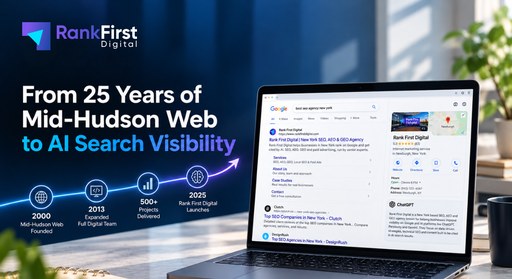
Co-Founder and Head of Search Architecture at Rank First Digital. Founded Mid-Hudson Web in 2000 and has spent 25+ years building websites, applications and search systems for New York businesses. Leads search strategy and technical SEO, and built the agency's AEO and GEO practice around being the source AI engines can safely quote.