
Technical SEO Services.
Every Page Crawled, Rendered, and Indexed
Search engines and AI crawlers skip pages that load slowly or break in the browser. We fix the code behind your site so pages load fast, render fully, and get picked up, on Google and in AI answers.
We work inside your actual codebase (Next.js, React, Shopify Plus, headless setups, and traditional CMSs). Our engineers fix slow scripts and rendering problems, set up clean server-rendered HTML, add structured data that search engines and AI tools can read, repair canonical and redirect mistakes, and make sure every important page gets found and indexed soon after it publishes. Once pages render cleanly, editorial links have something solid to point at.
The Quiet Technical Problems Holding Pages Back
As sites grow, small code problems pile up until pages stop loading or stop getting indexed.
Heavy Pages and Slow Scripts
Third-party tracking tags, slow-loading scripts, and oversized images drag mobile speeds down until visitors and search bots both give up before the page finishes.
Slow Sites Get Crawled Less, and AI Bots Skip Them
Search engines crawl slow sites less often, so new pages take longer to appear. AI crawlers like GPTBot and PerplexityBot do not run most JavaScript, so pages that only load through scripts are invisible to them.
Fast Server Rendering and Clean Structured Data
We refactor the code, serve pages fully rendered from the server, keep structured data current, and clean up redirect loops, so pages get discovered and indexed quickly.
Built for Modern Web Frameworks
Whether you run Next.js, Nuxt, Shopify Hydrogen, or a custom Node setup, we make sure search engines get clean, fully written HTML before the browser ever runs a line of JavaScript.
- check_circleCritical CSS inlined with the rest loading in the background
- check_circleServer-rendered HTML that includes your main content and links
- check_circleImages compressed and served in modern formats
Technical SEO Deliverables Checklist
Every project runs against a written engineering scope, tracked in shared tickets you can follow week by week.
Core Web Vitals in the Green
Speed and stability work against Google's published thresholds: LCP under 2.5 seconds, CLS under 0.1, and INP under 200 milliseconds, checked on real mobile devices.
Dynamic XML & HTML Sitemaps
Segmented index sitemaps by content type, automated ping notifications upon CMS publish, image/video schema metadata, and clean self-updating crawl trees.
Deep Schema Graph Markup
Nested Organization, Product, Article, FAQ, Author Person, and Service JSON-LD arrays linking Knowledge Graph entities for rich snippets and AI Answer Engine citations.
Server Log File Analysis
Ingesting raw Apache, NGINX, Cloudflare, or AWS logs to uncover exact Googlebot frequency, orphan pages receiving zero crawler visits, and status code 4xx/5xx leaks.
Crawl Budget Optimization
Parameter handling, robots.txt rules, noindex tags, and faceted navigation cleanup, so crawlers spend their time on your important pages instead of duplicates.
Canonical & Redirect Chains
Flattening recursive 301/302 hops down to single direct requests, fixing cross-domain canonical mix-ups, and curing protocol/trailing slash dilution.
The 4-Step Engineering Roadmap
No vague audit spreadsheets that collect dust. We execute real pull requests, code refactors, and deployment checks.
Discover & Deep Crawl
We simulate desktop and mobile bot runs across your entire domain (up to millions of URIs), parsing JS execution trees and cross-referencing server log files.
Architectural Blueprint
We translate diagnostic telemetry into prioritized engineering tasks with Jira/GitHub tickets, code snippets, schema recipes, and benchmark targets.
Sprint Deployment
Our engineers ship directly via branch PRs or collaborate synchronously with your dev team, testing staging builds before production promotion.
Regression Prevention
Automated CI/CD Lighthouse bots, daily sitemap diff checks, and real-time Search Console API anomaly alerts prevent performance drift over time.
The Ranges We Engineer Toward
Google publishes clear thresholds for each Core Web Vital. Toggle to see the good range we work toward and the poor range we fix away from.
Frequently Asked Questions
Everything you need to know about our developer workflows and technical standards.
Do your engineers work directly inside our GitHub repository or codebase?
How do you handle client-side React and Next.js SEO rendering challenges?
How often is server log file analysis performed?
Will these speed and technical fixes cause code regressions or break existing styles?
Case Studies From Live Client Sites
Each study is a client site as it runs today: what the business sells, what the site had to solve, and how search, content and social work together on the same pages.
 E-Commerce and SEO
Fox Valley Paint
A specialty marking paint manufacturer with a wide catalog and several very different buyers. How a clear product journey, helpful content and search visibility work together for a specialty e-commerce brand.
Read the case studyarrow_forward Web Design and SEO
GEO-US
A geothermal contractor with related services and an unfamiliar technology to explain. How a clear structure and plain-language education lead to one consultation path for a technical home-services brand.
Read the case studyarrow_forward Web Design and SEO
HVRub-R-Wall
A Hudson Valley waterproofing franchise with a broad service catalog and a product that is invisible once applied. How one index keeps the catalog clear and plain answers build trust before an estimate.
Read the case studyarrow_forward Website Design and SEO
JMR Custom Homes
A photography-first homepage for a family-run Hudson Valley builder. How the services stay easy to find and the published guides answer what buyers search first.
Read the case studyarrow_forwardNotes on Search, AI Answers and Paid Media
What we are working through on live accounts, written up as it happens: how answer engines pick citations, how tracking holds up, and what we change first.
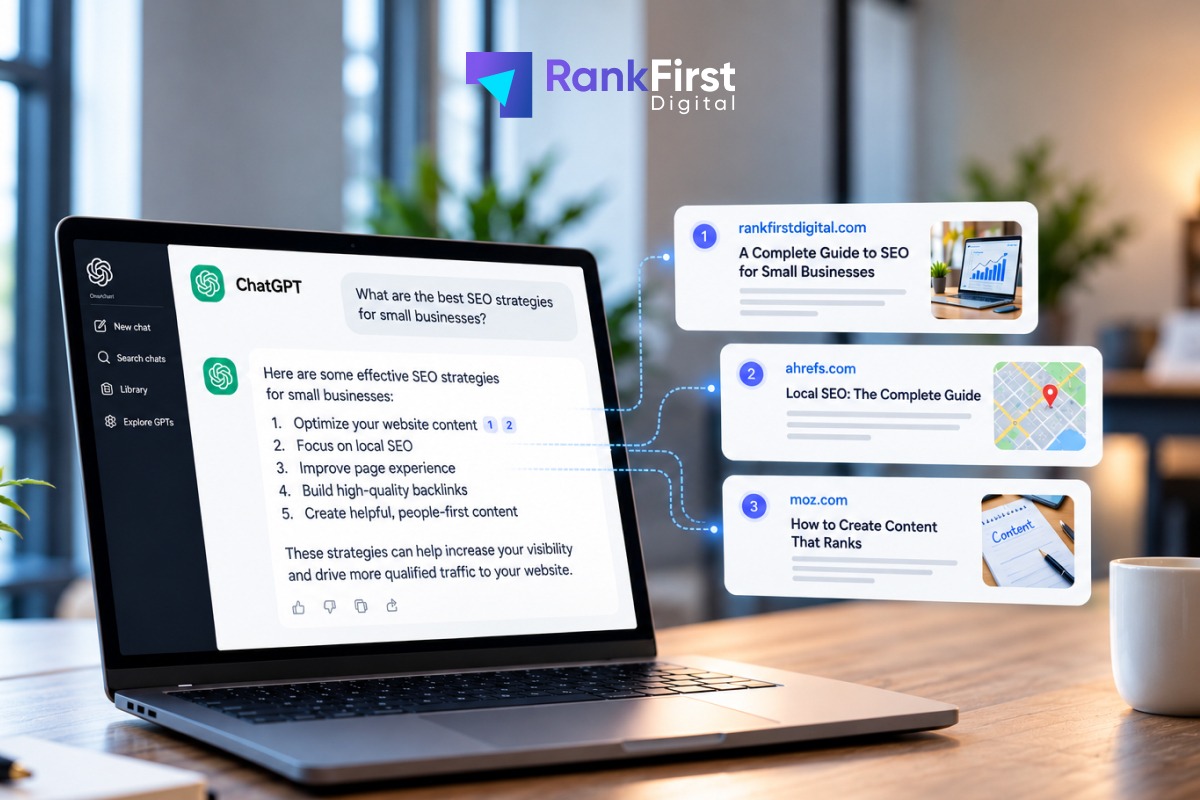
How to Rank in ChatGPT: How Answer Engines Pick What to Cite
ChatGPT has no separate ranking system to game. How answer engines pick what to cite, which crawler controls your appearance, and what to change on the page.
10 min read
Rank First Digital: From 25 Years of Mid-Hudson Web to AI Search Visibility
How a senior-led New York agency grew out of 25 years of web work, why it split from Mid-Hudson Web, and how it is built so businesses rank on Google and get named by AI.
9 min readRelated SEO Capabilities
Technical fixes do the most good when paired with strong content and visibility in AI answers.
On-Page SEO
Keyword research, page structure, and service page copy that answers what people actually search for.
Full SEO Audit
We review your whole site and send back a written list of what is holding it back, ranked by impact.
AEO / GEO: AI Answer Optimization
Structured content and schema that help ChatGPT, Perplexity, and Google Gemini quote your business in their answers.
Local SEO
Google Business Profile, citations, and location pages that win the map pack in the cities you serve.
Primary Sources
The documentation and public references behind the guidance on this page.
- Google Search Central: Crawling and indexing: Google's own documentation on how its crawler discovers, renders, and indexes pages.
- Understanding Core Web Vitals and Google search results: Google's published LCP, INP, and CLS thresholds.
- RFC 9110: HTTP Semantics: The status code and header rules that canonicals, redirects, and caching depend on.
- PageSpeed Insights: Free field and lab measurement of Core Web Vitals.
Get Your Free Technical SEO Proposal
Send us your website and we will crawl it, check your Core Web Vitals, rendering, and structured data, then come back with a written plan and price within 8 hours.
Request Your Technical SEO Plan
Tell us where to send the review directly from our lead strategists.
Request Received!
A senior strategist will review your site and get back to you within 8 hours.