
Let the homes lead
Present high-end residential work through compelling imagery.
JMR Custom Homes is a family-run builder working across the Hudson Valley since 1978, offering custom homebuilding alongside renovations and additions. This case study looks at how a photography-first homepage carries a small catalogue of services, how published guides build trust before a consultation, and how the same site supports local SEO and digital marketing across the region.
Custom homebuilding and renovations each get their own page and a clear route to a quote.
Three articles on permits, builder questions and ADUs answer what buyers search for first.
A quote button in the hero, a banner call to action and contact details in the footer.
Service pages, a named testimonial and location signals support search across the Hudson Valley.
According to its own website, JMR has built homes across the Hudson Valley since 1978, combining architectural refinement, modern building technology and family-run values. The company presents two core services, custom homebuilding and renovations and additions, backed by an in-house carpentry team and green technology divisions.
Custom homebuilding and renovations and additions, each with its own page on the live site.
An internal carpentry team working alongside trade partners.
Geothermal and spray foam insulation divisions sit beside the building work.
Established in 1978, presented as a family business rather than a franchise.
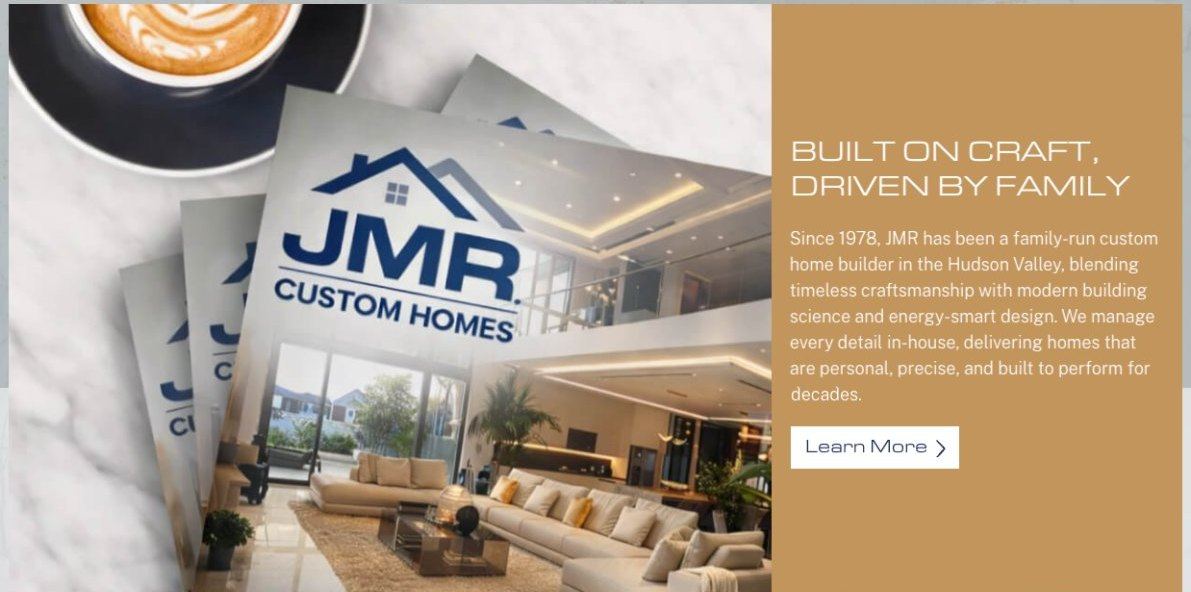
History, service descriptions and the 1978 date above are the company's own claims, taken from jmrcustomhomes.com.
These are the design considerations for a business of this type: sell a product nobody can walk through yet, on a catalogue of two, to a buyer who decides slowly. They are considerations for the category, not reported client complaints.
Present high-end residential work through compelling imagery.
Communicate experience and attention to detail without long copy.
Homebuilding and renovation offerings should be easy to discover.
Help visitors understand how the company works with clients.
Company background and testimonials should be close at hand.
A consultation pathway should always be visible.
Large interior and exterior photographs set the tone of the site, standing in for the one thing a website cannot do here: let a visitor walk through the building. They appear unaltered in the captures shown below.
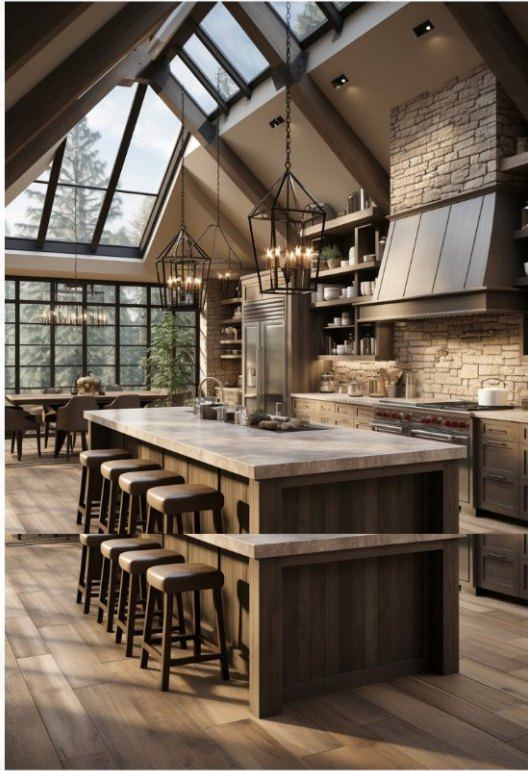
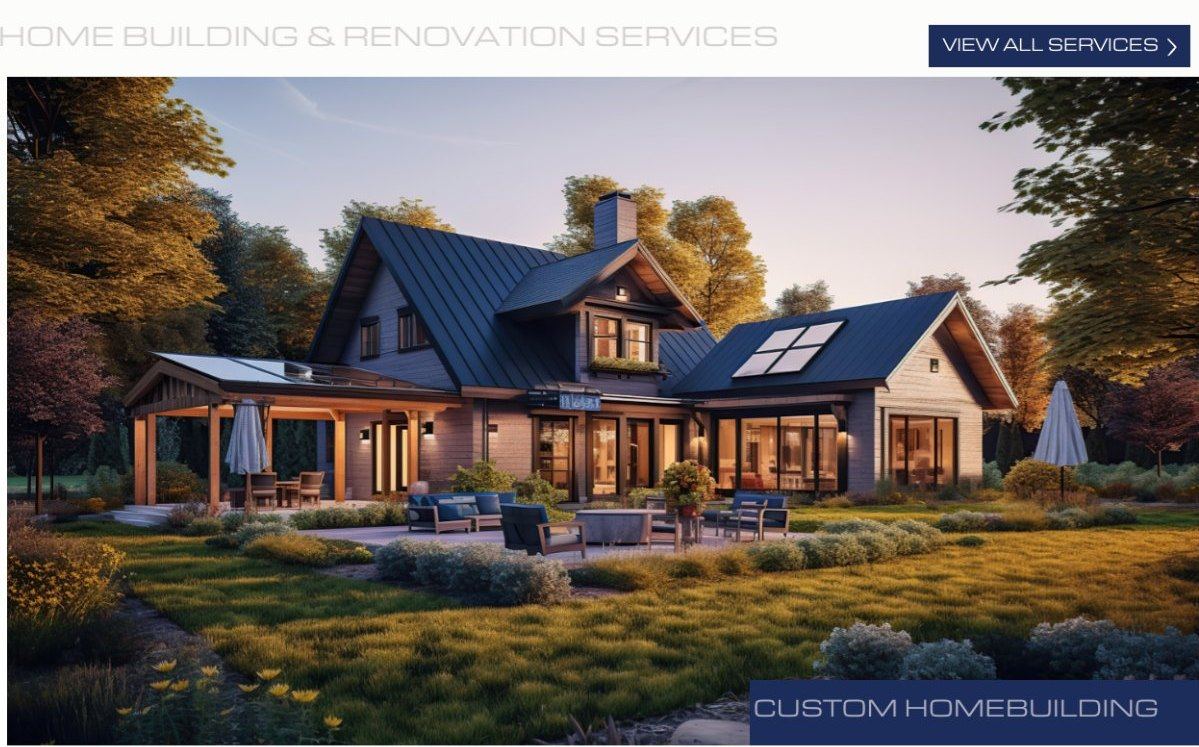
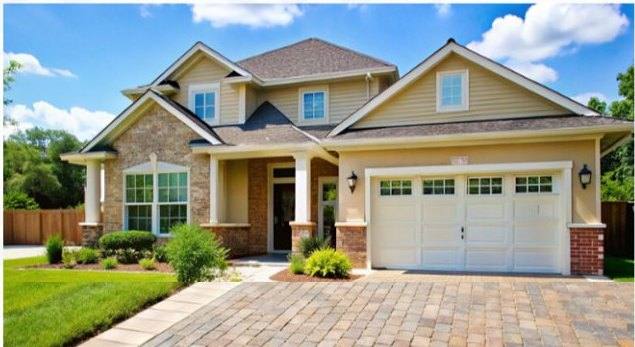
A short catalogue is easier to organize than a long one, but it leaves more work for the surrounding copy. Each service keeps its own page on the live site, and five stated reasons carry the case for the company as a whole.
Bespoke residential design and construction, presented through large interior and exterior photography.
View servicearrow_forwardWork on existing properties, held beside new builds under one clear service path.
View servicearrow_forward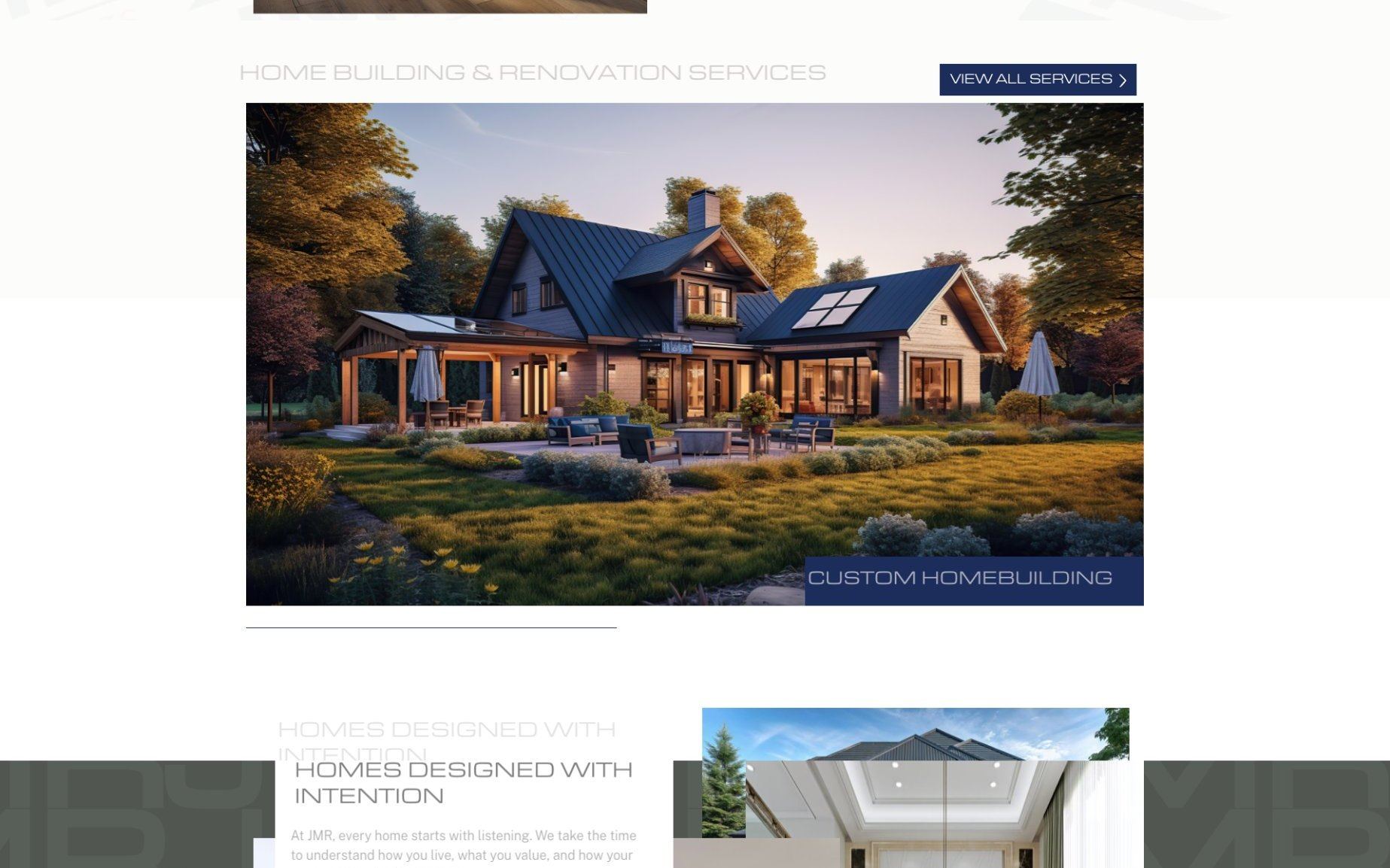
The five reasons shown on the homepage, each with its own photograph.
Established in 1978, with decades of craftsmanship and industry relationships.
Smart layouts, lasting materials, natural light and flow.
Geothermal and spray foam insulation divisions.
In-house carpentry and trade partners.
From initial estimates to the final walk-through.
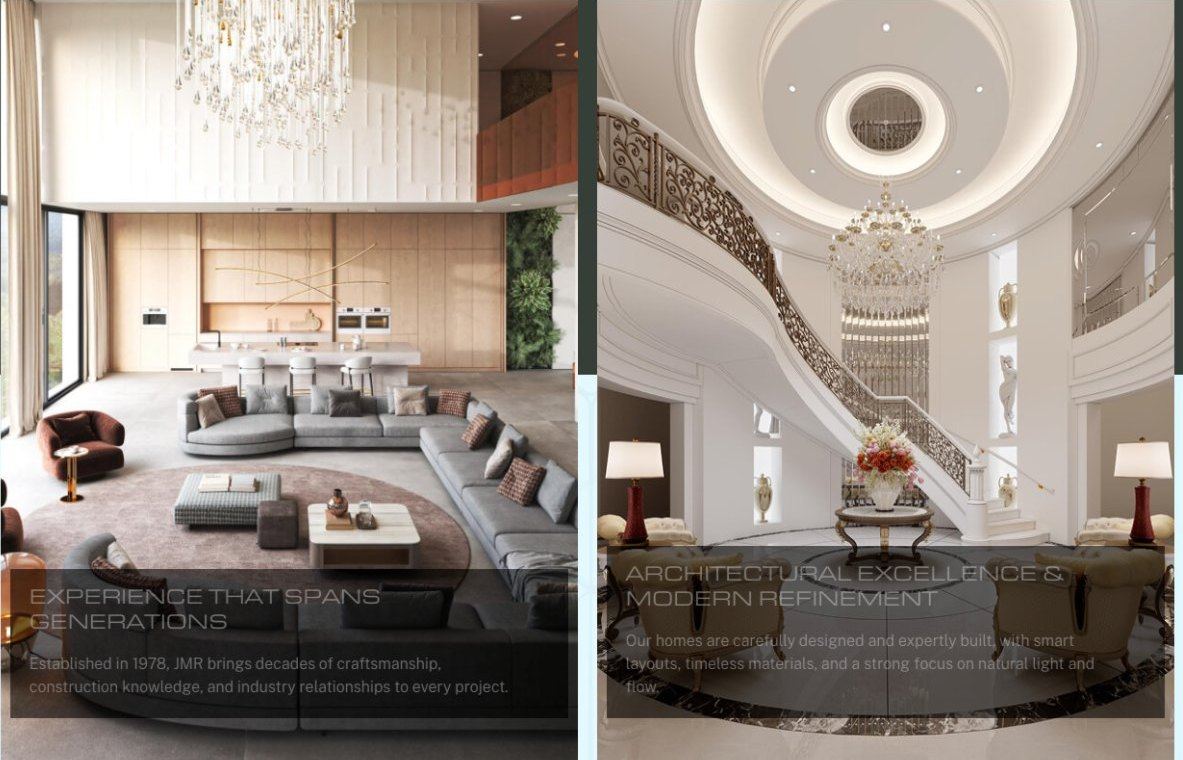
Crops of a genuine full-page capture of jmrcustomhomes.com. The source capture is small, so these are shown at modest sizes to stay sharp.
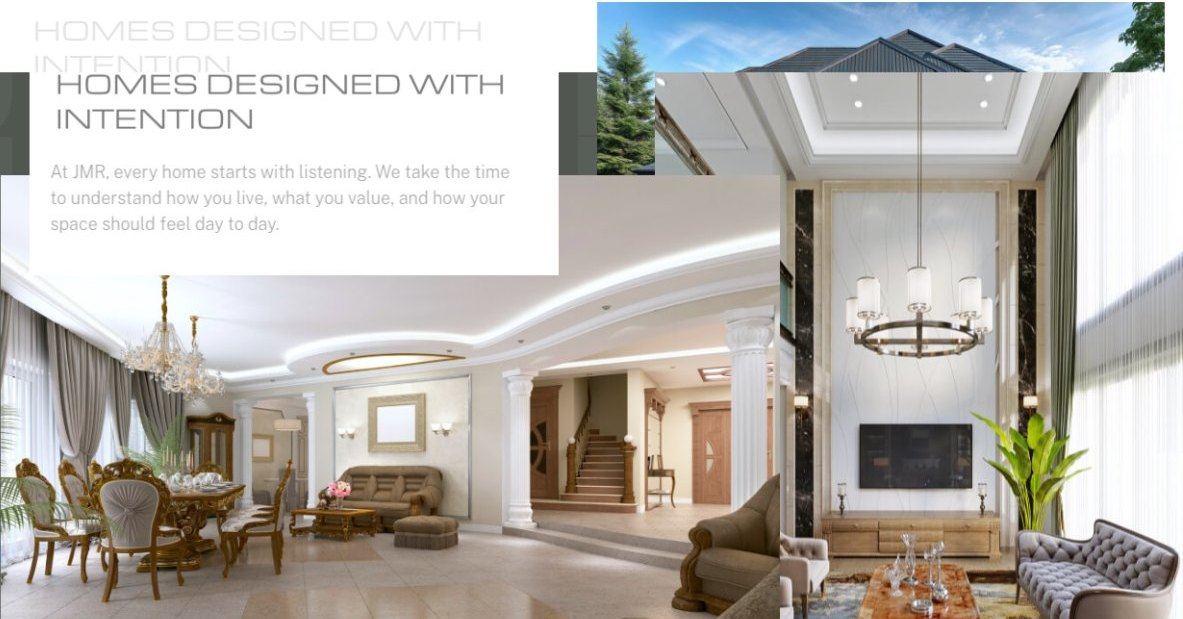
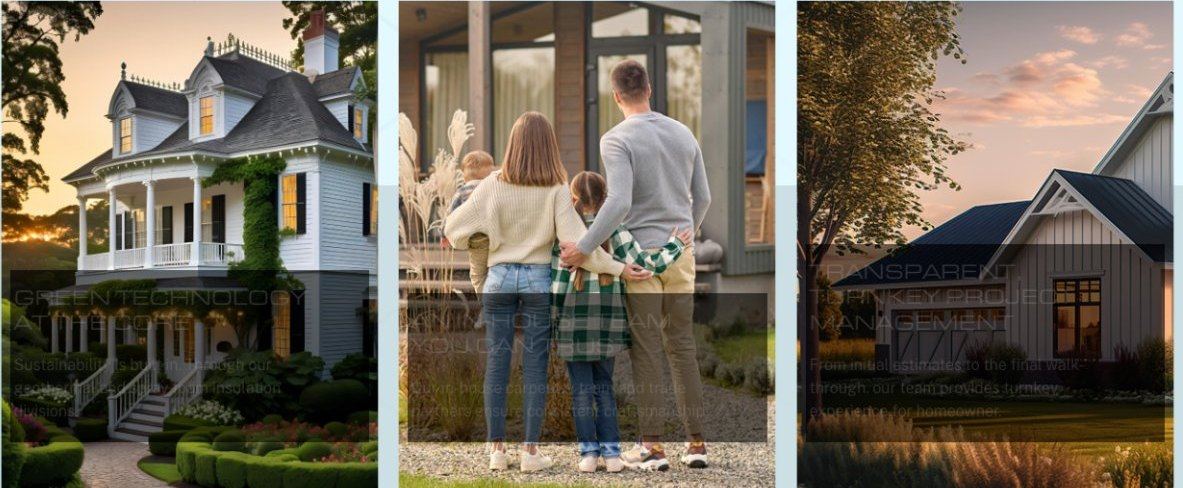
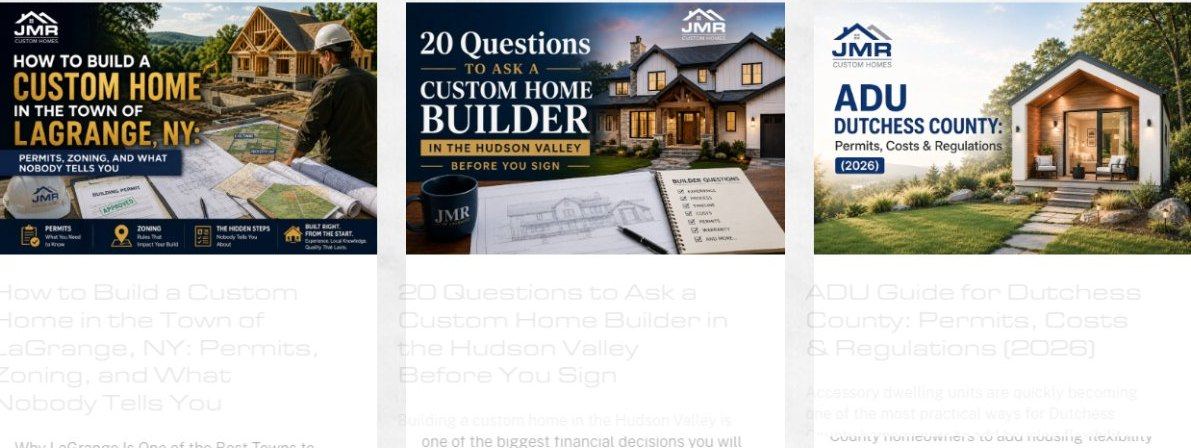

These are the stages a visitor can follow on the page. They describe the structure of the site, not measured visitor behaviour.
The hero states the promise: luxury, craftsmanship, custom homes.
Services and home imagery show what the company builds.
About, Why Choose JMR and a testimonial from David Collins, Business Owner.
Get A Quote links to the contact page; phone and email appear in the footer.
A testimonial attributed to a named customer and a complete contact block sit on the homepage itself, so a visitor never has to hunt for the next step.
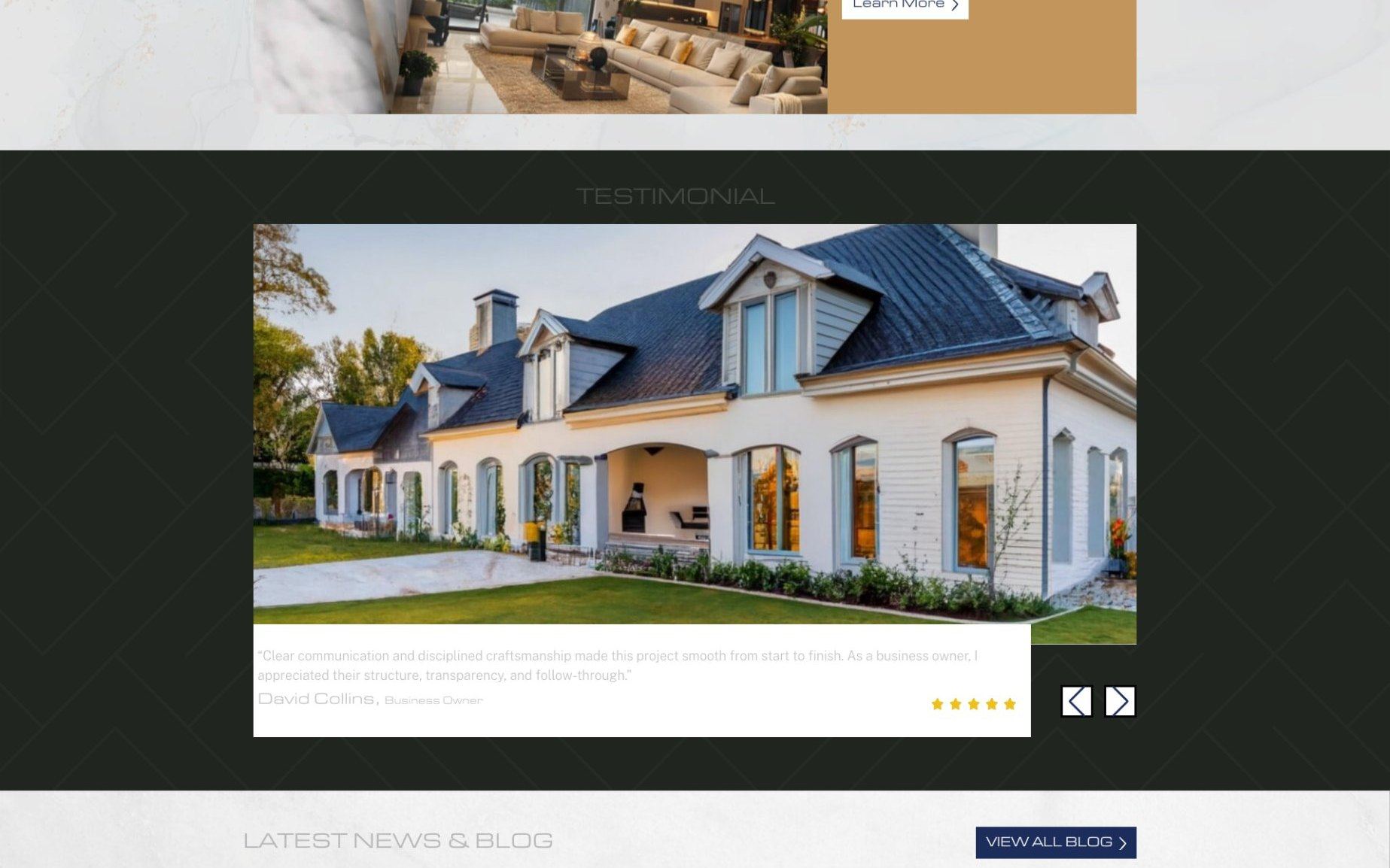
The quote pathway repeats across the page rather than sitting in one place only.
The desktop capture is shown in full below. A genuine mobile screenshot of jmrcustomhomes.com was not available when this page was assembled, so none are shown rather than substituting a resized desktop image or a phone mockup.
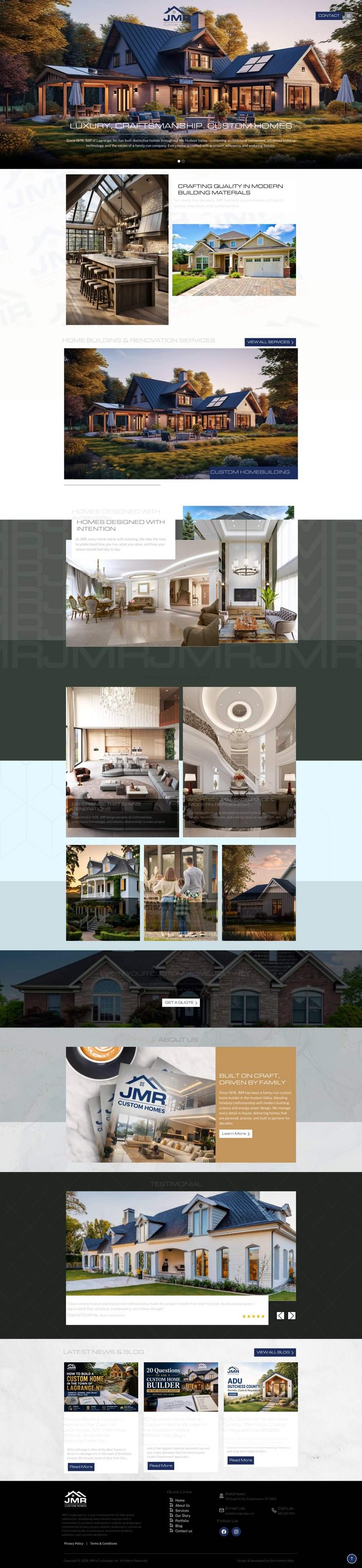
No measured results have been provided for this project, so no results are claimed. These are observable qualities of the site itself.
Large interior and exterior photography leads each section of the page.
Two services, each with its own page, plus five reasons to choose the company.
Family-run values and a history since 1978, stated by the client.
An About section, a named testimonial and three helpful blog guides.
A Get A Quote button, the phone number 845 240 1827 and build@jmrlagrange.com.
Geothermal and spray foam divisions set the company apart from general builders.
Testimonials, the 1978 date and any figures on JMR Custom Homes' own site are company claims, not results delivered by Rank First Digital.
A custom home is chosen slowly, and most of that research happens in search before anyone picks up the phone. These are the areas a local search and content program covers for a builder like this, and the ones it would be measured on. No performance data has been provided for this project, so these are coverage areas and observable signals on the live site, not claimed results.
A dedicated page per service plus a Hudson Valley presence give local search something specific to match for custom home and renovation queries.
Clean headings, titles and one URL per service, with schema markup and a consistent header as the baseline.
Three published guides already answer what buyers search first: permits, questions to ask a builder and accessory dwelling units.
Plain explanations of the build process and the green technology divisions help the site get cited when someone asks AI and answer engines what a custom home involves.
A testimonial attributed to a named customer and a long-running company history support trust in local results.
Architectural photography gives a builder material to carry outward through social media, extending each finished home beyond the website.
These are the digital marketing and search areas a program covers for a local service business. They describe where a search and social program would focus for a site like this, not work confirmed as delivered for this client.
Tell us about your site and your market. We will review how your work is presented and outline the work we would prioritize first.
Send your website and we will come back with what we would change first, plus a short plan of what we would test and measure.
Each study is a client site as it runs today: what the business sells, what the site had to solve, and how search, content and social work together on the same pages.
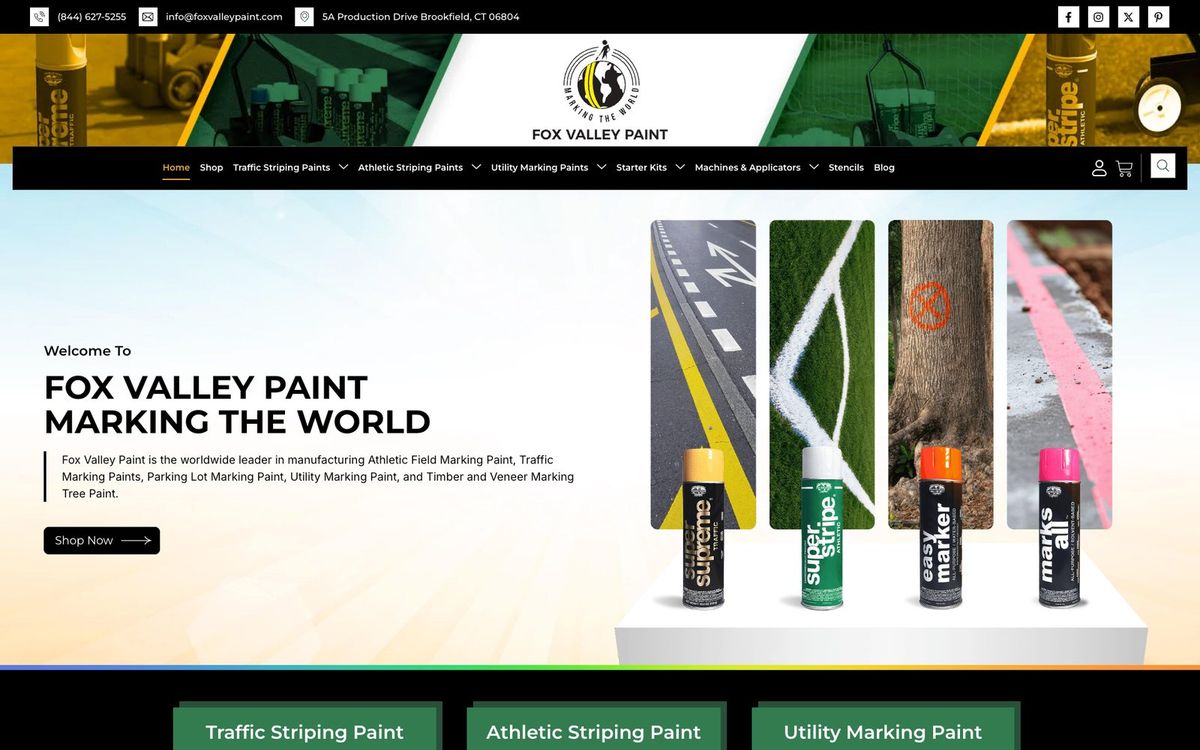 E-Commerce and SEO
A specialty marking paint manufacturer with a wide catalog and several very different buyers. How a clear product journey, helpful content and search visibility work together for a specialty e-commerce brand.
Read the case studyarrow_forward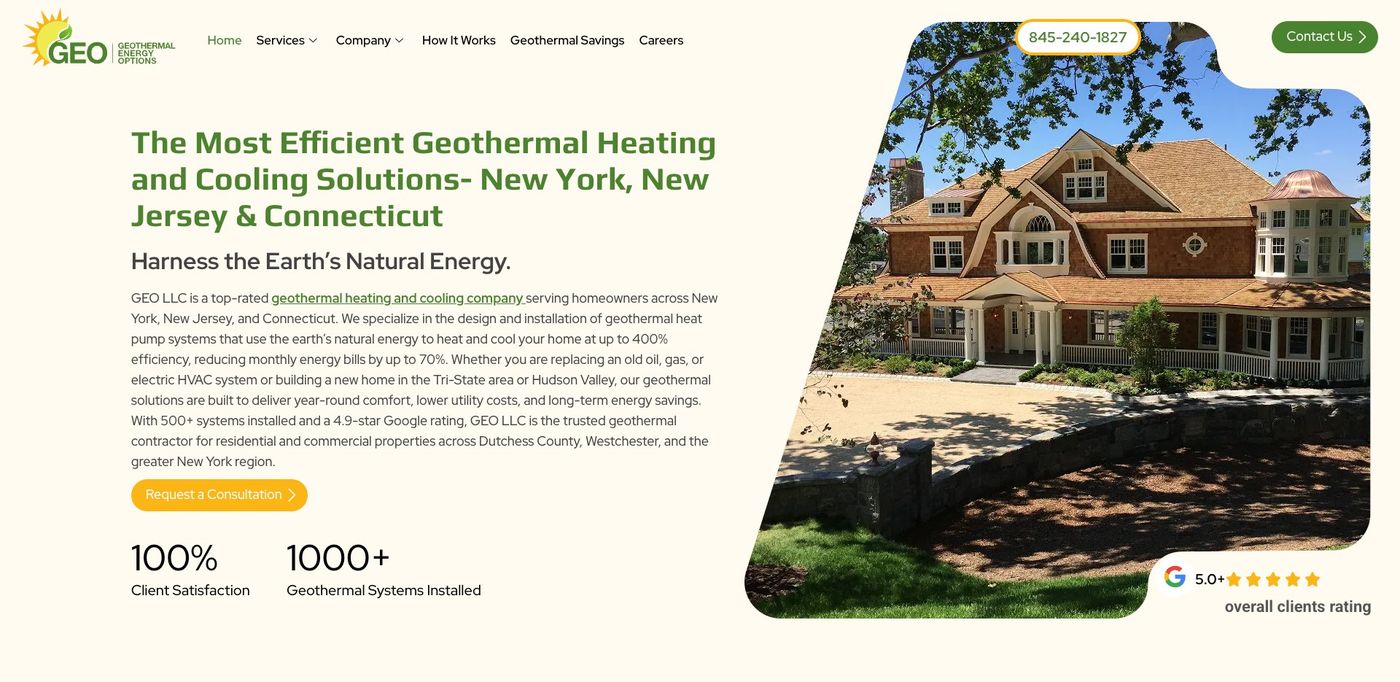 Web Design and SEO
A geothermal contractor with related services and an unfamiliar technology to explain. How a clear structure and plain-language education lead to one consultation path for a technical home-services brand.
Read the case studyarrow_forward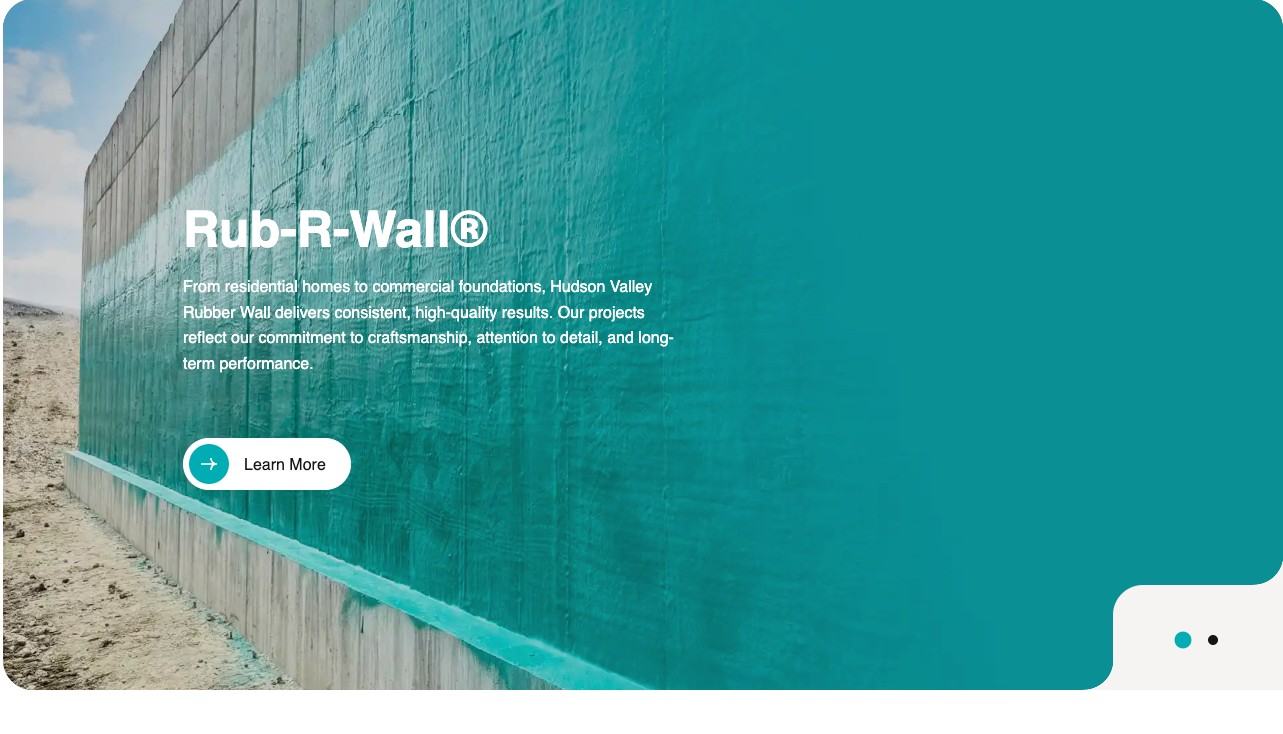 Web Design and SEO
A Hudson Valley waterproofing franchise with a broad service catalog and a product that is invisible once applied. How one index keeps the catalog clear and plain answers build trust before an estimate.
Read the case studyarrow_forwardWhat we are working through on live accounts, written up as it happens: how answer engines pick citations, how tracking holds up, and what we change first.
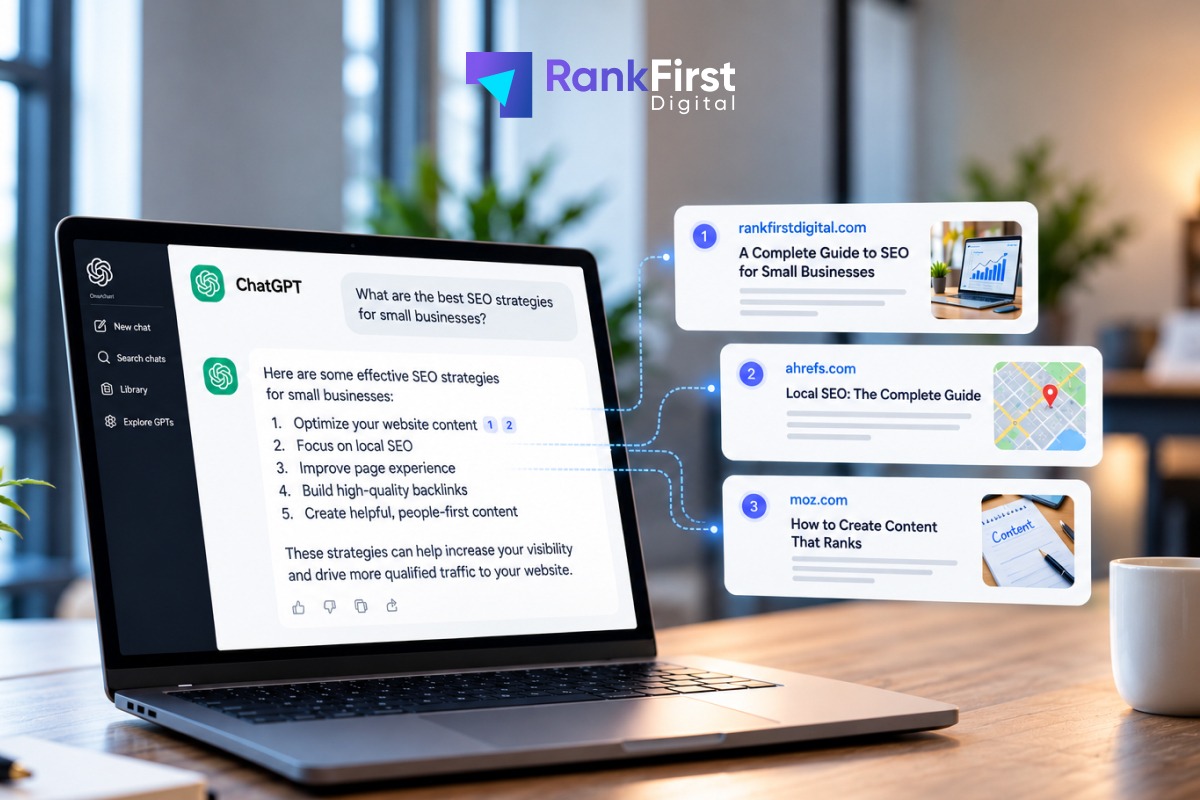
ChatGPT has no separate ranking system to game. How answer engines pick what to cite, which crawler controls your appearance, and what to change on the page.
10 min read
How a senior-led New York agency grew out of 25 years of web work, why it split from Mid-Hudson Web, and how it is built so businesses rank on Google and get named by AI.
9 min read